My Math Academy: Accessibility Analysis
My Math Academy: Accessibility Analysis
My Math Academy: Accessibility Analysis
An in-depth accessibility and usability analysis of a game-based math platform to improve experiences for current and future learners.
An in-depth accessibility and usability analysis of a game-based math platform to improve experiences for current and future learners.
An in-depth accessibility and usability analysis of a game-based math platform to improve experiences for current and future learners.
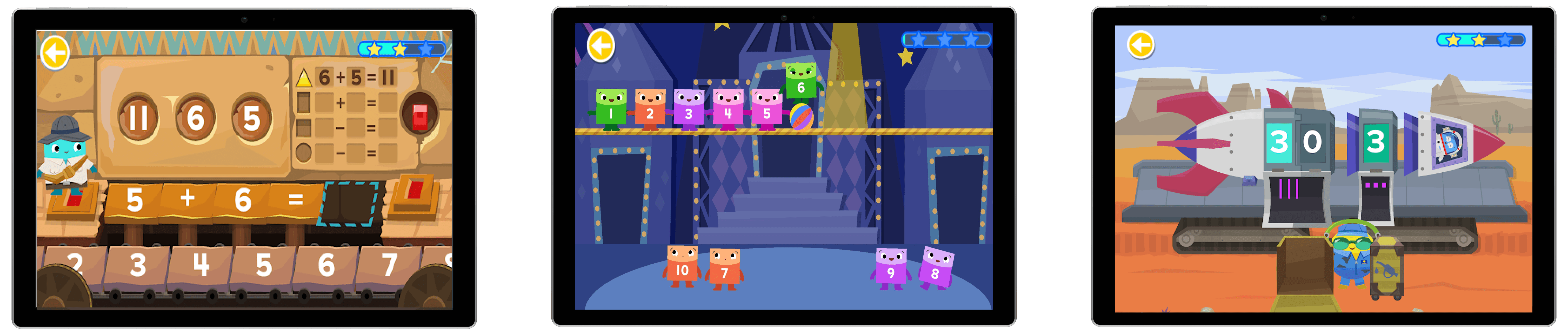
My Math Academy (MMA) helps young learners (Pre-K to 2nd) build a strong understanding of fundamental math concepts and skills. MMA is being used by over 100,000+ students coming from diverse socio-economic backgrounds.
My Math Academy (MMA) helps young learners (Pre-K to 2nd) build a strong understanding of fundamental math concepts and skills. MMA is being used by over 100,000+ students coming from diverse socio-economic backgrounds.
My Math Academy (MMA) helps young learners (Pre-K to 2nd) build a strong understanding of fundamental math concepts and skills. MMA is being used by over 100,000+ students coming from diverse socio-economic backgrounds.
Role
Experience Designer II
Experience Designer II
Experience Designer II
Duration
3 months
3 months
3 months
[The Challenge]
[The Challenge]
[The Challenge]
MMA’s content ecosystem had grown rapidly, but accessibility standards had not scaled with it. As a result, inconsistencies across their 30+ games, interactive modules, UI patterns, and instructional components created barriers for learners with diverse cognitive, visual, and motor needs.
An initial accessibility audit was conducted by a third-party vendor and the results showed that 23 out of 50 requirements were not supported in our game activities.
This audit included information from WCAG 2.0 and 2.1 checklist of success criteria and highlighted issues relating to audio, visual, and keyboard standards.
MMA’s content ecosystem had grown rapidly, but accessibility standards had not scaled with it. As a result, inconsistencies across their 30+ games, interactive modules, UI patterns, and instructional components created barriers for learners with diverse cognitive, visual, and motor needs.
An initial accessibility audit was conducted by a third-party vendor and the results showed that 23 out of 50 requirements were not supported in our game activities.
This audit included information from WCAG 2.0 and 2.1 checklist of success criteria and highlighted issues relating to audio, visual, and keyboard standards.
MMA’s content ecosystem had grown rapidly, but accessibility standards had not scaled with it. As a result, inconsistencies across their 30+ games, interactive modules, UI patterns, and instructional components created barriers for learners with diverse cognitive, visual, and motor needs.
An initial accessibility audit was conducted by a third-party vendor and the results showed that 23 out of 50 requirements were not supported in our game activities.
This audit included information from WCAG 2.0 and 2.1 checklist of success criteria and highlighted issues relating to audio, visual, and keyboard standards.
[The Solution]
[The Solution]
[The Solution]
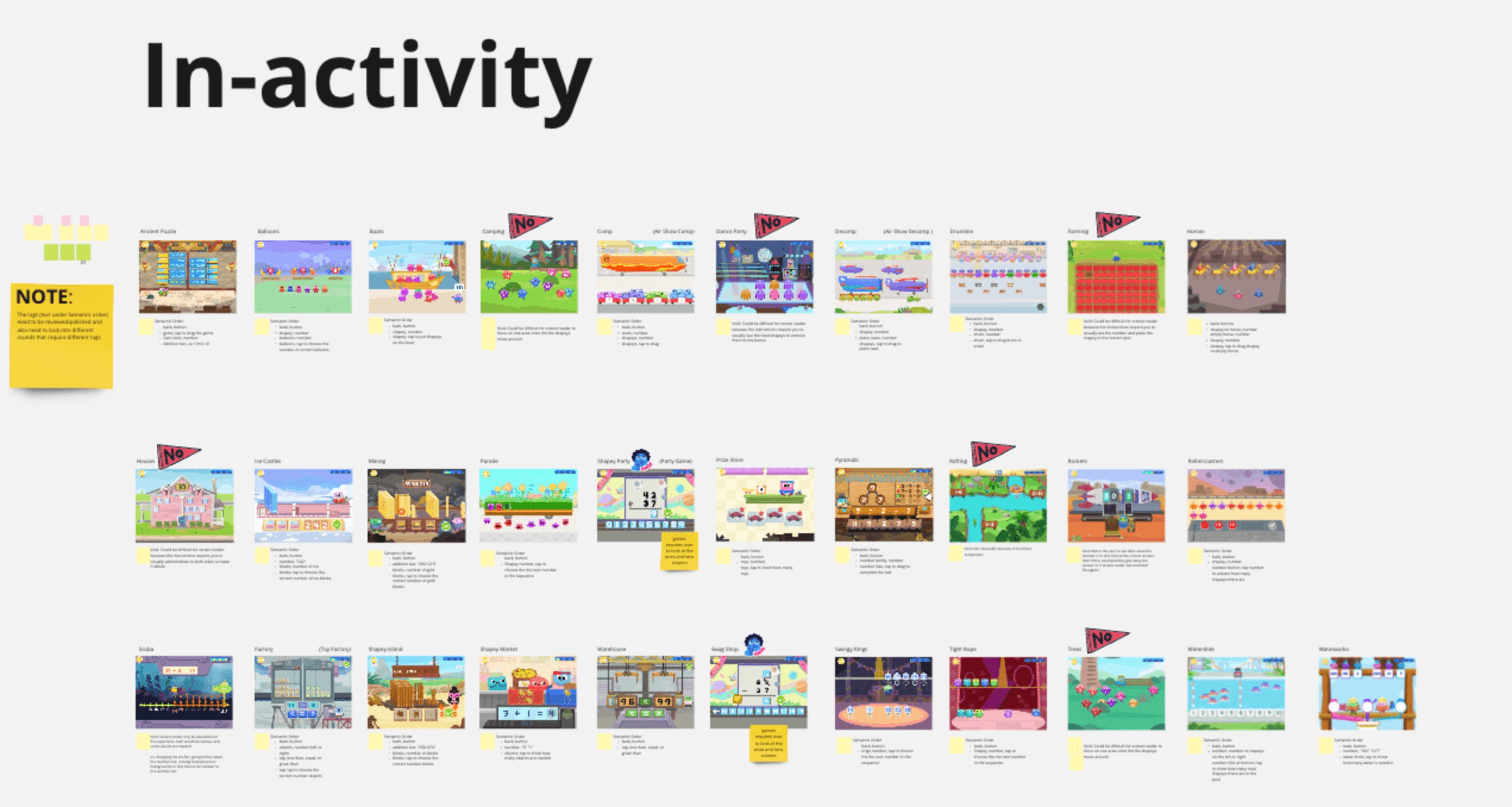
I was tasked to lead initial accessibility efforts to correct the unsupported requirements found in the audit. My approach included research, strategy, and an accessibility assessment of 30+ game activities. I worked closely with product managers, researches, and developers to provide scalable and efficient solutions.
I was tasked to lead initial accessibility efforts to correct the unsupported requirements found in the audit. My approach included research, strategy, and an accessibility assessment of 30+ game activities. I worked closely with product managers, researches, and developers to provide scalable and efficient solutions.
I was tasked to lead initial accessibility efforts to correct the unsupported requirements found in the audit. My approach included research, strategy, and an accessibility assessment of 30+ game activities. I worked closely with product managers, researches, and developers to provide scalable and efficient solutions.
[Deep dive into accessibility]
[Deep dive into accessibility]
[Deep dive into accessibility]
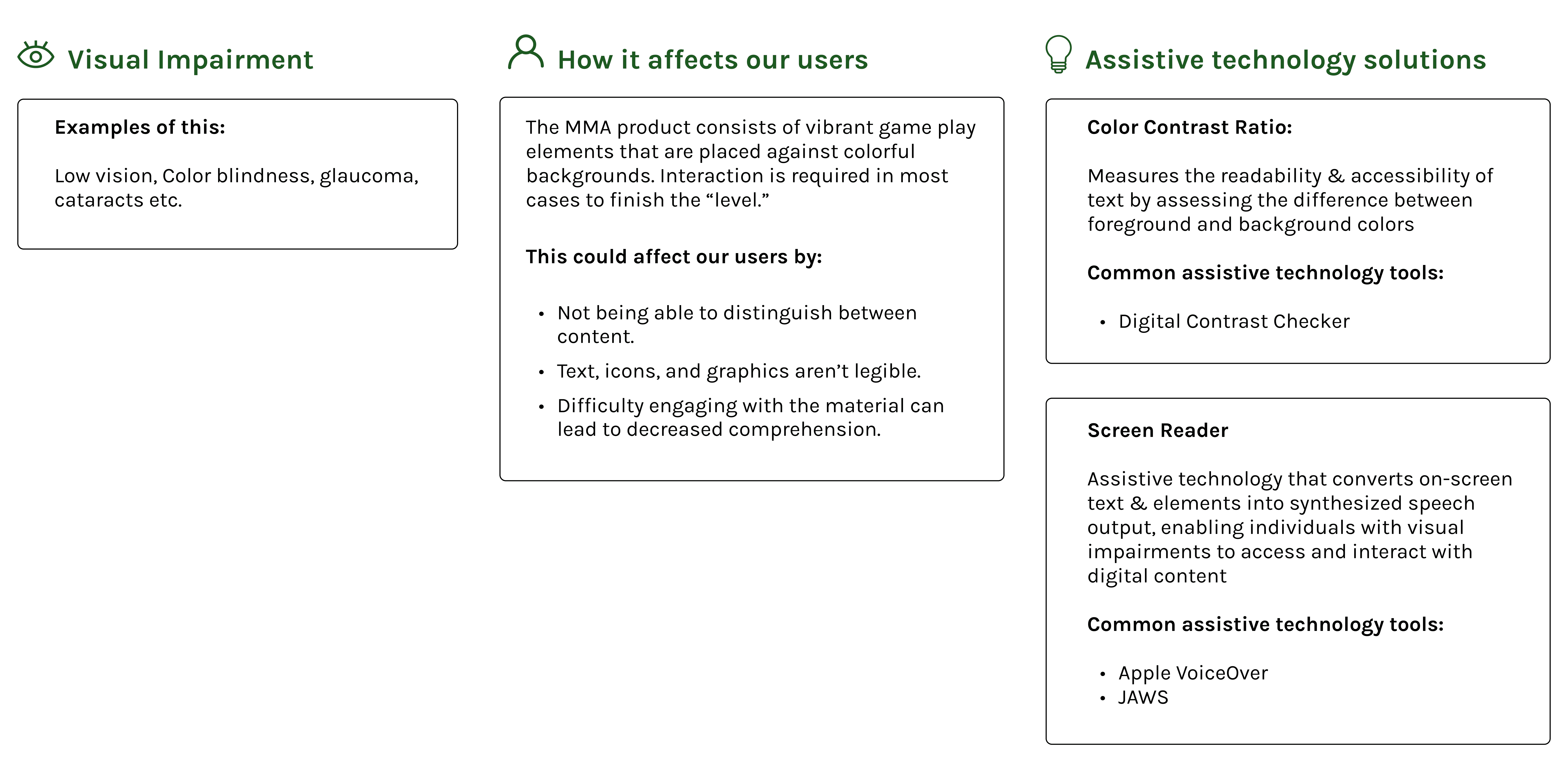
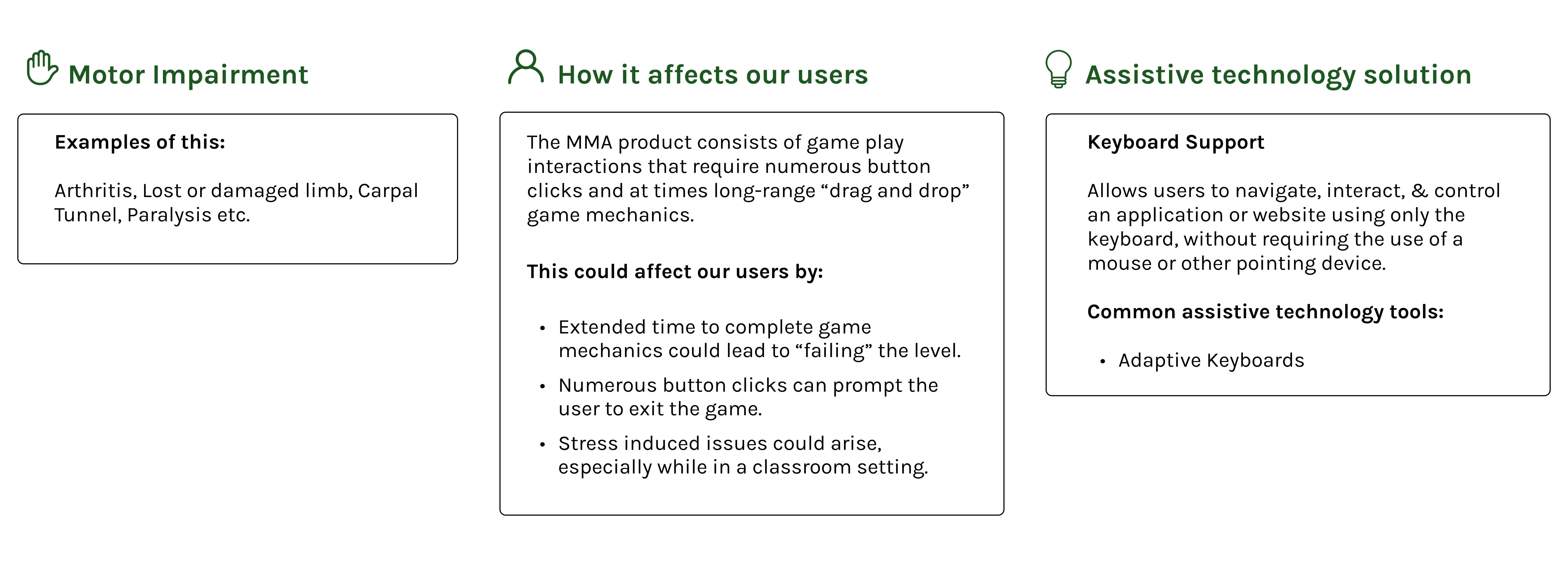
I conducted a structured review of visual, cognitive, motor, and auditory impairments, mapping each to potential friction points within our game-based learning environment. This allowed me to identify where our experience could unintentionally exclude users and prioritize systemic improvements over isolated adjustments.
I conducted a structured review of visual, cognitive, motor, and auditory impairments, mapping each to potential friction points within our game-based learning environment. This allowed me to identify where our experience could unintentionally exclude users and prioritize systemic improvements over isolated adjustments.
I conducted a structured review of visual, cognitive, motor, and auditory impairments, mapping each to potential friction points within our game-based learning environment. This allowed me to identify where our experience could unintentionally exclude users and prioritize systemic improvements over isolated adjustments.

[Prioritization of business needs]
[Prioritization of business needs]
[Prioritization of business needs]
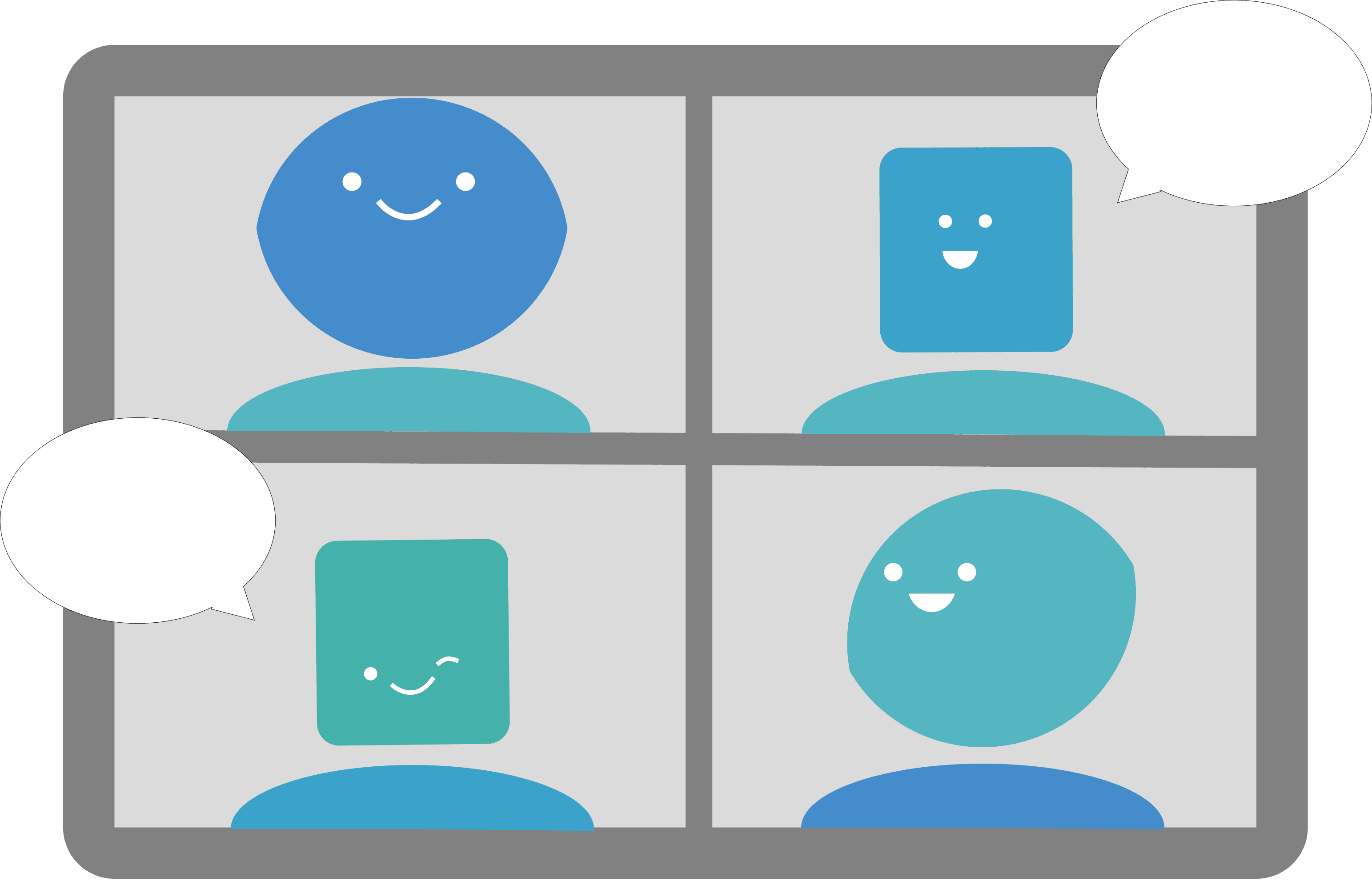
Product Managers - The complexity of work is larger than our current deadline, how do we prioritize business needs?
Engineers - Do the developers have the current bandwidth to tackle accessibility issues on top of their normal work? Will these back-end changes affect the current system?
Designers - How do we advocate for our accessibility users without taking away the essence of our product that our users are familiar with? Do we have time to work with research to conduct user interviews?
Product Managers - The complexity of work is larger than our current deadline, how do we prioritize business needs?
Engineers - Do the developers have the current bandwidth to tackle accessibility issues on top of their normal work? Will these back-end changes affect the current system?
Designers - How do we advocate for our accessibility users without taking away the essence of our product that our users are familiar with? Do we have time to work with research to conduct user interviews?
Product Managers - The complexity of work is larger than our current deadline, how do we prioritize business needs?
Engineers - Do the developers have the current bandwidth to tackle accessibility issues on top of their normal work? Will these back-end changes affect the current system?
Designers - How do we advocate for our accessibility users without taking away the essence of our product that our users are familiar with? Do we have time to work with research to conduct user interviews?
[Defining Standards]
[Defining Standards]
[Defining Standards]
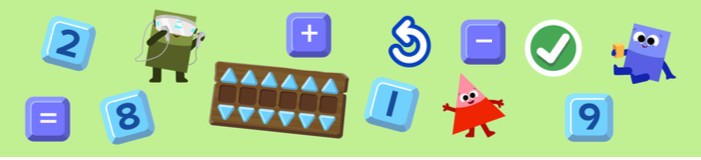
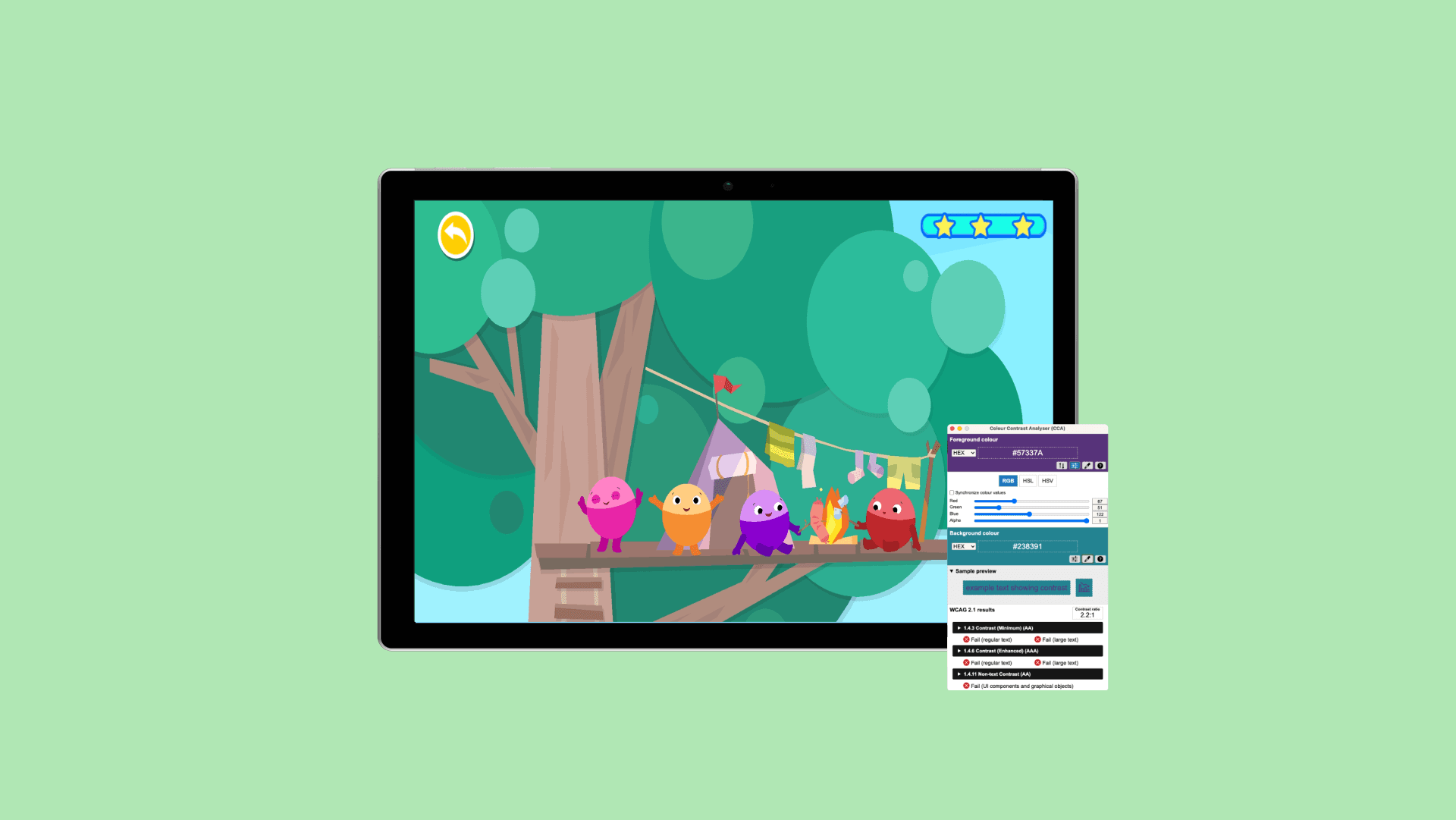
Text and Non-Text Color Contrast
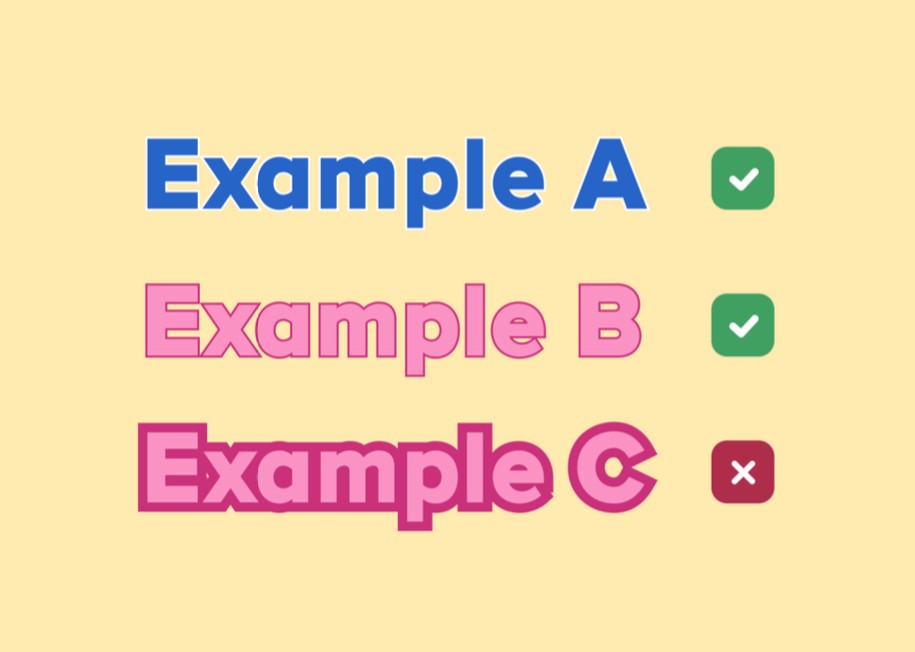
Use contrast to make it easier for users to see and hear content including separating foreground from background.
Color is not used as the only visual means of conveying information, indicating an action, prompting a response, or distinguishing a visual element
Text, UI components, and graphical objects must be large enough.
Text and Non-Text Color Contrast
Use contrast to make it easier for users to see and hear content including separating foreground from background.
Color is not used as the only visual means of conveying information, indicating an action, prompting a response, or distinguishing a visual element
Text, UI components, and graphical objects must be large enough.
Text and Non-Text Color Contrast
Use contrast to make it easier for users to see and hear content including separating foreground from background.
Color is not used as the only visual means of conveying information, indicating an action, prompting a response, or distinguishing a visual element
Text, UI components, and graphical objects must be large enough.
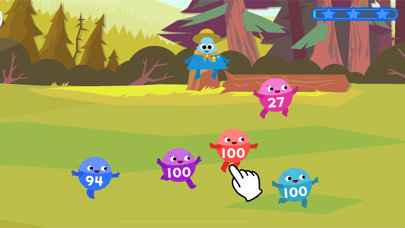
Simplified Game Mechanics
Simpler game functions like “tap” were more favorable than more challenging ones like “drag and drop.”
Timing and dexterity should never be a requirement for success in a game.
Simplified Game Mechanics
Simpler game functions like “tap” were more favorable than more challenging ones like “drag and drop.”
Timing and dexterity should never be a requirement for success in a game.
Simplified Game Mechanics
Simpler game functions like “tap” were more favorable than more challenging ones like “drag and drop.”
Timing and dexterity should never be a requirement for success in a game.
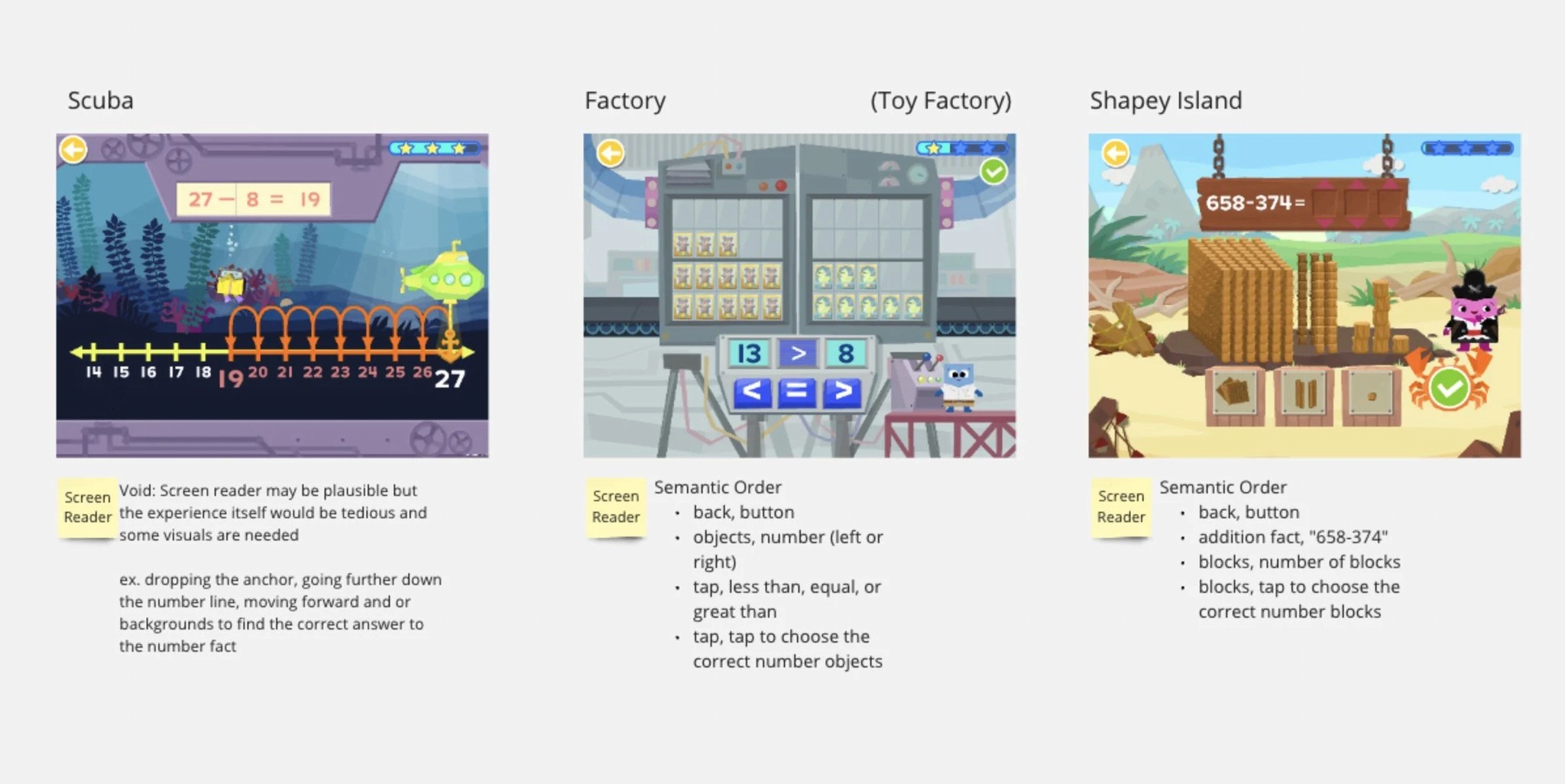
Markup Language
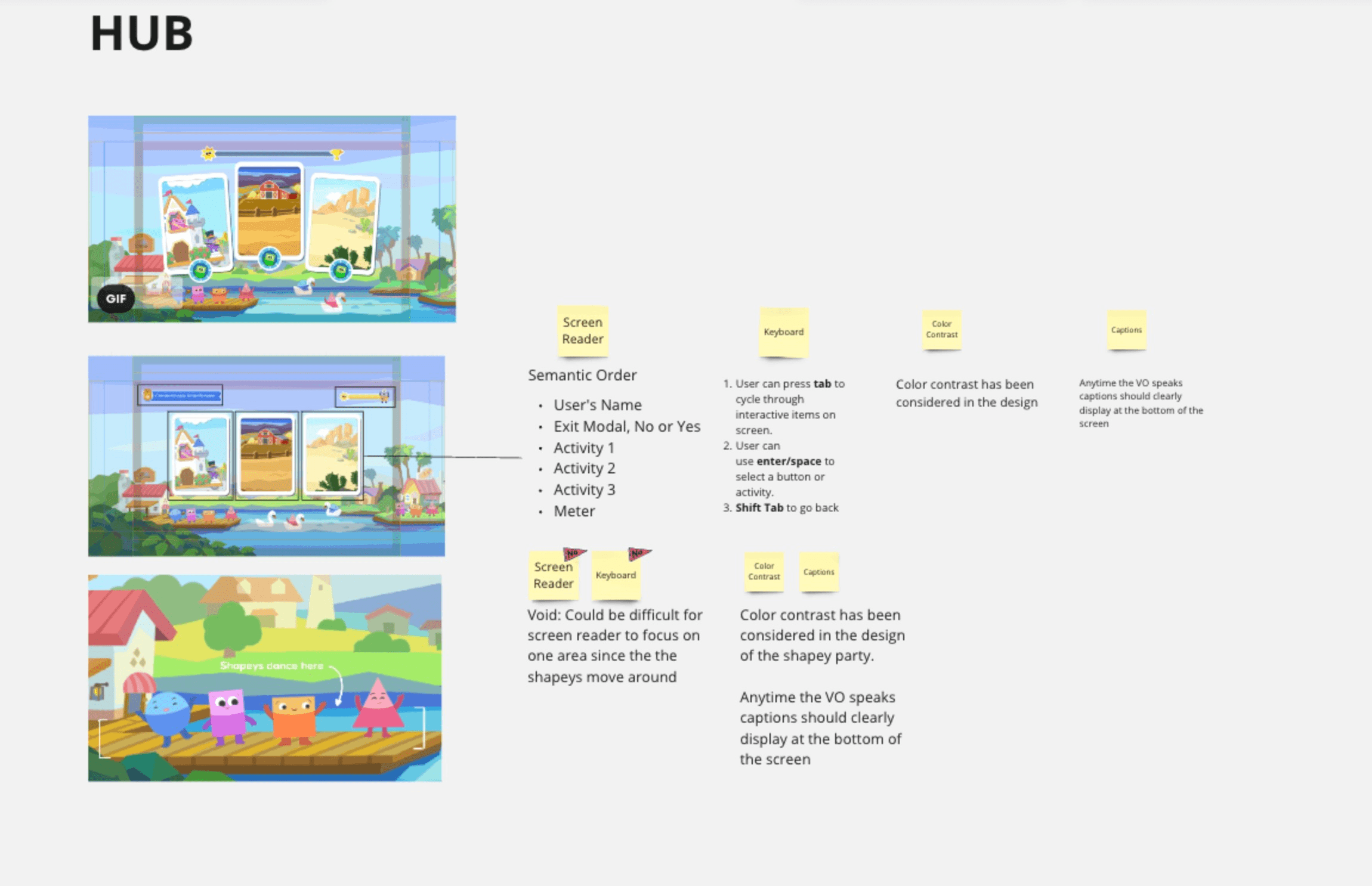
Screen readers worked more efficiently when elements are properly labeled using start and end tags.
This practice also allowed for a more efficient hand-off to developers for implementation.
Naming convention: Name, Role, Value
Markup Language
Screen readers worked more efficiently when elements are properly labeled using start and end tags.
This practice also allowed for a more efficient hand-off to developers for implementation.
Naming convention: Name, Role, Value
Markup Language
Screen readers worked more efficiently when elements are properly labeled using start and end tags.
This practice also allowed for a more efficient hand-off to developers for implementation.
Naming convention: Name, Role, Value
[Outcome]
[Outcome]
[Outcome]
The collective accessibility work was compiled into a presentation and shown to key stakeholders. From there the efforts were handed off to another department’s team. These adjustments would be made and a re-submission to the third-party vendor would allow the team to see if the “not supported” were now “supported”
As I continue to improve my design practice, I am eager to learn more about how I can create more inclusive and accessible designs for all users. I thoroughly enjoyed tackling this project and plan to continue learning more about accessibility through professional development courses.
The collective accessibility work was compiled into a presentation and shown to key stakeholders. From there the efforts were handed off to another department’s team. These adjustments would be made and a re-submission to the third-party vendor would allow the team to see if the “not supported” were now “supported”
As I continue to improve my design practice, I am eager to learn more about how I can create more inclusive and accessible designs for all users. I thoroughly enjoyed tackling this project and plan to continue learning more about accessibility through professional development courses.
The collective accessibility work was compiled into a presentation and shown to key stakeholders. From there the efforts were handed off to another department’s team. These adjustments would be made and a re-submission to the third-party vendor would allow the team to see if the “not supported” were now “supported”
As I continue to improve my design practice, I am eager to learn more about how I can create more inclusive and accessible designs for all users. I thoroughly enjoyed tackling this project and plan to continue learning more about accessibility through professional development courses.